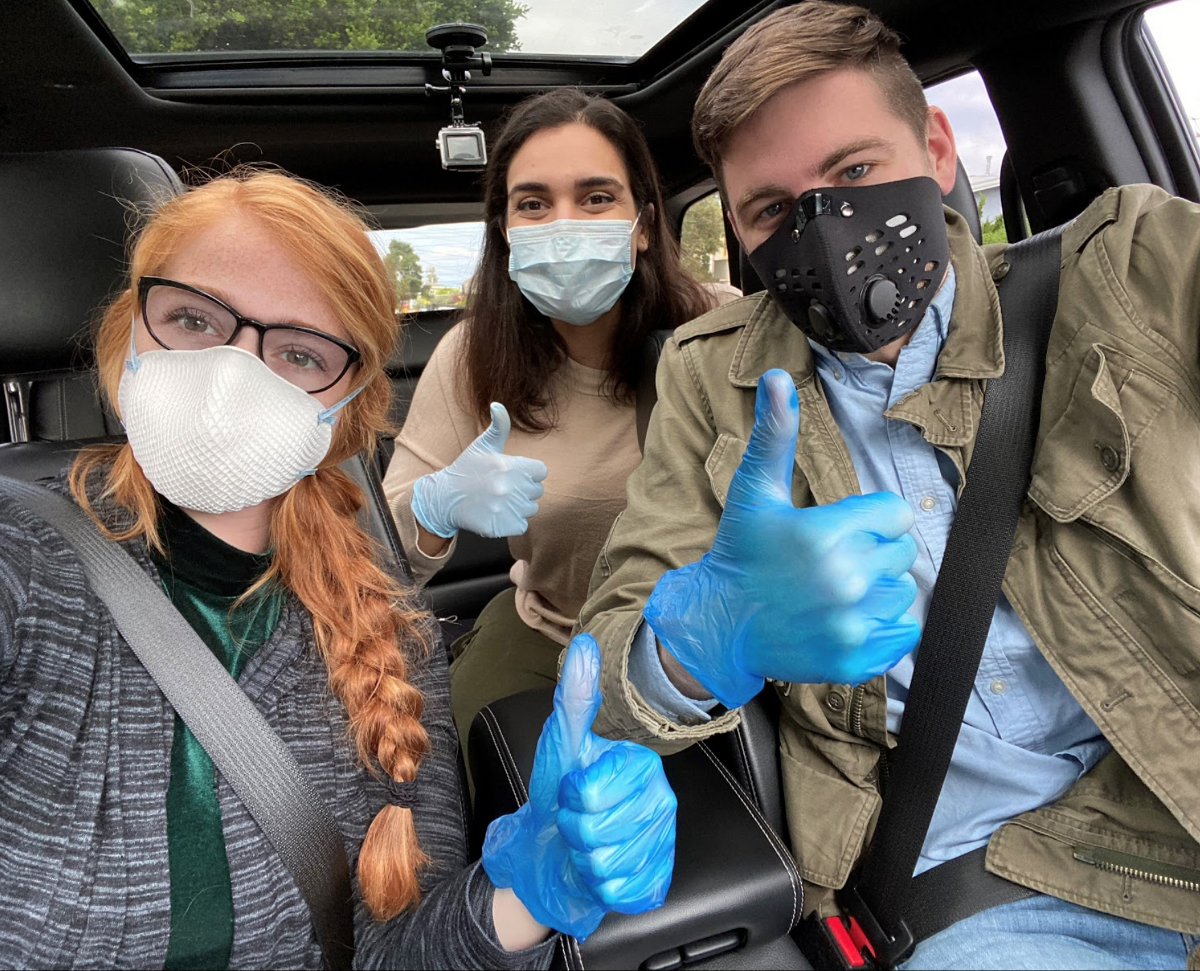
Team update, Global Product Development | By Samantha Yang
Introduction —
Quadriplegia, or tetraplegia, is a disability usually caused by spinal injury that results in lower limb and hand paralysis. It’s usually also accompanied by tetraparesis, which is muscle weakness that affects all four limbs, further decreasing the patient’s limb movement. Quadriplegic patients are also wheelchair users, which means they are only able to reach objects within their arm’s length. What’s more, most patients have very little to no control over their wrist movements, which means they are unable to grasp objects. This disability has around 100,000 new cases in the US every year. After some research, we discovered that there aren’t a lot of companies making gripper devices for quadriplegic patients due to the low number of people affected by this disability, as well as the uniqueness of each case.
Our mission is to enable quadriplegic and selected wheelchair users to grasp objects that they wouldn’t otherwise be able to hold, thus improving their daily quality of life. Our device will offer an affordable, adjustable, and reliable solution to millions of users worldwide.
History of the Project —
This assistive gripping device was a project by EnableTech, geared towards one particular quadriplegic patient. The EnableTech team concentrated their extensive research on her specific needs, while simultaneously collecting data on immediate needs of other quadriplegic conditions. The final prototype was functional, but we are hoping that by the end of this course, our device will reach an even broader market, while still meeting all the criteria for a quadriplegic gripping device.

Improvement Plan —
One of our main goals in the next design phase is to make the device mass-customizable. Due to the wide range of conditions quadriplegic patients could have, customizing the device while keeping costs low has been a real challenge for our competitors. We hope that by turning each component of our device modular, our device could be easily updated (by part) and customized on a much larger scale. The modularity of the product will help us to adopt the lean startup model by allowing the team to continually update the design of certain modules to better meet the needs of individual customers — while keeping costs down. We also have plans to get more patients on board to help us with further user research and testing, as this was a weak link in the previous design phase.
With these main design goals in mind, our niche market-strategy is to make quadriplegic gripper tools accessible to more people by keeping costs low and customization high.

Progress —
It is still early in the semester, but we have learned a lot already from the lectures in class and we can’t wait to apply our new knowledge to this project. We recently met with our faculty mentor, Professor Hannah Stuart, to discuss possible design changes. We focused on making the device more usable by reducing weight and improving claw function. Professor Stuart’s specific suggestions included replacing metal components with lighter nylon alternatives, reducing the number of claw shafts, using an aluminum rod, and adding bushings to the device.
We look forward to seeing where this project takes us! There is a lot of space for improvement in bettering quadriplegic patients’ lives, and we are excited to see the impact our device will deliver to the quadriplegic community!
To keep up with what we’re doing, check us out here