[ad_1]
Karin Bauer from UC Berkeley’s Haas School of Business and Lauren Weymouth from Ripple have apparently been brainstorming about how to incorporate blockchain-based courses into programs of other universities, and also how to make this effort more inclusive. Dr. Ali Emdad from Morgan State University was also a partner, and came up with an idea for how to scale this effort.
This is roughly how the 2019 HBCU Blockchain Curriculum Development Institute was born. And it was planned for Halloween. In New Orleans. I thought long and hard about accepting the invite to serve as a mentor (my neighborhood children are still in tears after encountering a dark porch and an empty candy dish). The event was designed to assist roughly 60 faculty from 30 different historically black colleges and universities. Bowie State, Tuskegee, Buan, and other institutions were well represented, with departments ranging from computer science, auditing, public/health policy, management information systems, and of course business in attendance. I have taught a Blockchain Challenge Lab at the Sutardja Center for Entrepreneurship & Technology for a few semesters and had enjoyed evolving the course with the assistance of various UC Berkeley co-lecturers and Blockchain Xcelerator’s Jocelyn Weber. The other mentors were even more qualified and steeped in the blockchain domain: Prof. Andrew Wu from University of Michigan and Prof. Lee Reiners from Duke University’s School of Law also came to the Big Easy.
We had met on some video calls and created an interactive
and immersive program for the attendees that included mentor presentations
about trends in blockchain and related courses, a discussion panel with
Q&A, as well as group exercises designed to produce actual syllabi. Some
faculty were trying to create completely new programs, while others were adding
blockchain as a new and potentially disruptive element to their existing
finance and computer science courses. The organizers and mentors stressed that
the latter integration could not be simply “bolted-on” in Prof. Lee Reiner’s
exact words, but that the students needed to be challenged to analyze the
impact of this profound new technology and concept on their disciplines. We had
some great discussions about how decentralization, transparency, and
immutability inherent in blockchain systems can change industries and society,
in general.
We had also challenged the faculty to explore new modalities. Instead of long textbook readings and quizzes we had proposed curriculum elements like case studies, role-play games, and hands-on labs. Supplemental materials included articles, videos, and a Slack channel for collaboration and a link to a knowledgebase.
I had described my own blockchain challenge lab syllabus,
where we incorporate design thinking, the Berkeley
Entrepreneurship Method, and guest lecturers to keep the students engaged
and learning together.
We hope that all of the attendees will take the resources,
lessons learned, and networks created back to their institutions and help
evolve their blockchain curricula. I am also told that the program will
continue next year.
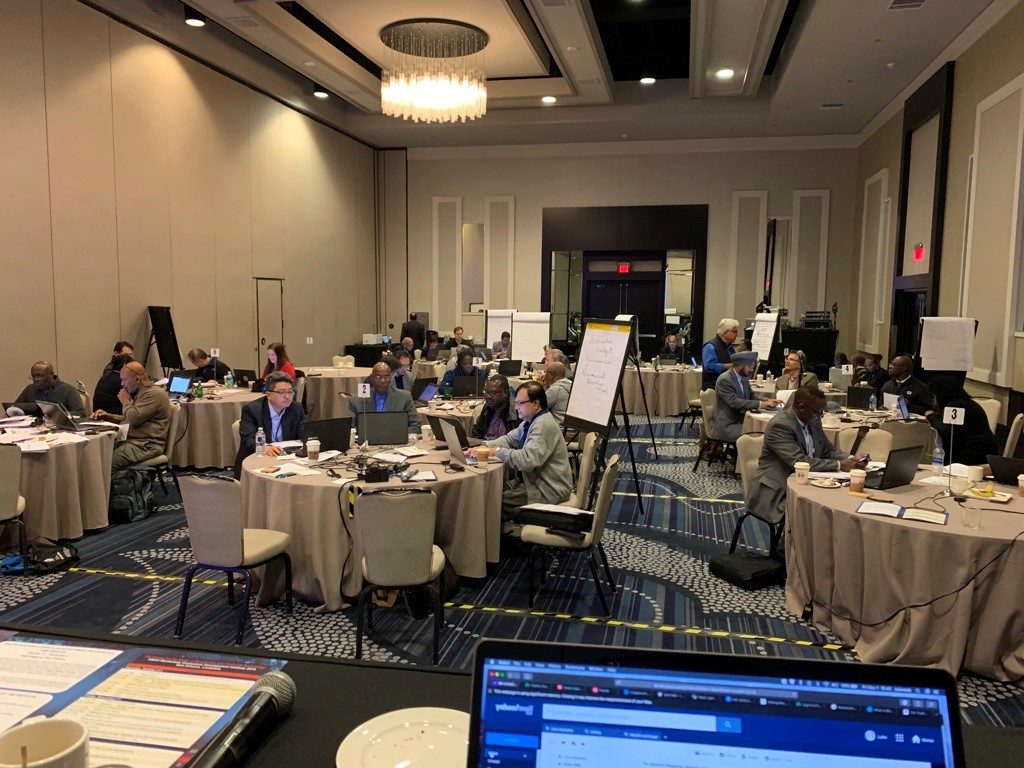
And while we were locked in a hotel for almost 3 days
working on the tangible deliverables we did feel obliged to explore New
Orleans, particularly since it was Halloween. As academics, we needed to decide
on the “method” before anyone could venture outside. We picked ethnographic inquiry
as the safest data collection tool. Everyone knows that researchers can only
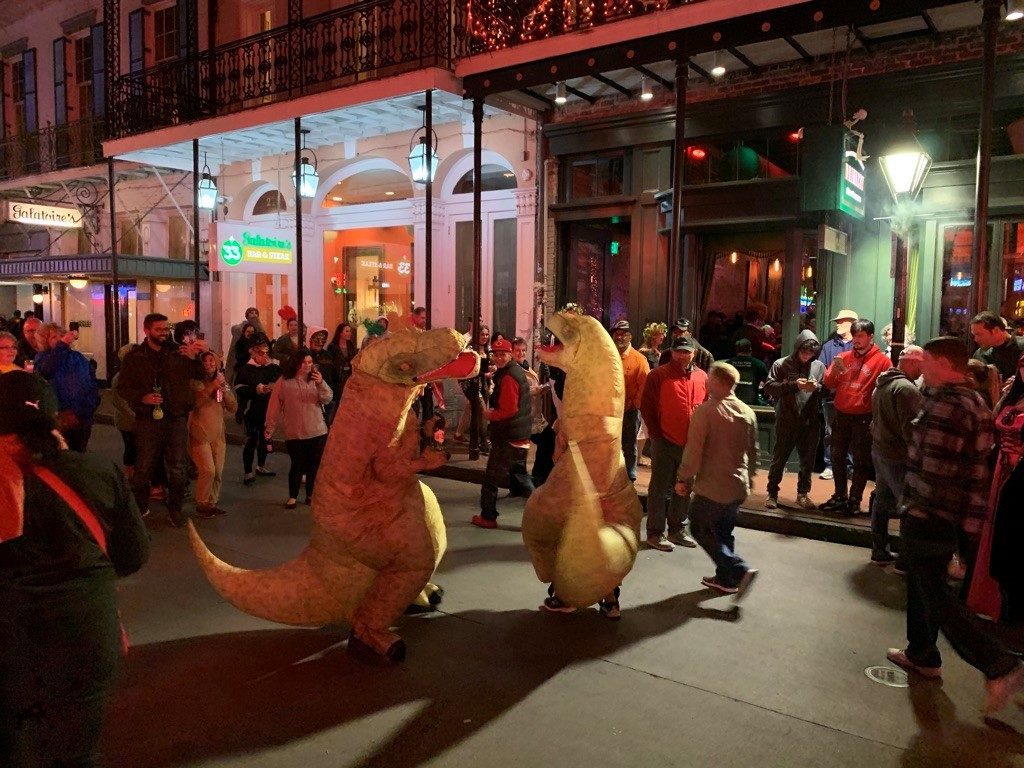
observe and should not disturb the subjects. As you can see below, It really was
challenging and it required a lot of discipline NOT to join the “dancing dinosaurs”
on Bourbon Street.
Thanks to Morgan State staff, Ali Emdad, Judith Schnidman, and Sanjay Bapna for the hospitality, master of ceremonies skills, and excellent logistics, major kudos to Ripple for sponsoring this important work, and I certainly hope to return. My idea for the next one? Attendee Prof. Joanne Luciano from University of the Virgin Islands should definitely be approached as a potential host!
The post A Blockchain Halloween in New Orleans appeared first on UC Berkeley Sutardja Center.
[ad_2]
Source link
