[ad_1]

The ENGIN183/283 course has a more informal name of: “To Be a Futurist: How to Win (and Lose), AI and Healthcare Startups”.
This class contains about 70 students from all walks of life, majors, cultures, and levels, including undergraduate, graduate, PhD, and exchange students. Science, liberal arts, and business students create case studies, form teams, and brainstorm startup ideas.
The three main deliverables involve the following activities, games, and assignments:

1. The Podcast and the Founder Interviews:
This is a mid-term that is not a quiz. Students are encouraged to step out of their comfort zone and interview a founder on camera. Some locate this person in their school network; others seek them out from past jobs or even recruit their extended family. This is the second installment of these interviews, and the chosen 6-minute videos were so good we had to create a podcast to share the entrepreneurial wisdom beyond our classroom. This was the assignment brief to set the context for this series.

Find a company founder in your network or recruit a new person and ask them questions about their entrepreneurial journey. You should edit the video down to the required time, add visuals, special effects, transitions, company logo, music, video, or subtitles, or other enhancements to make it compelling. Please publish the video on YouTube.
Questions and Format
- Introduce yourself as the interviewer / reporter
- For Entrepreneur: Can you tell us your name, business, and role in it?
- Background: What factors in your background have led you to start your own venture and become an entrepreneur?
- Describe the Value Proposition of your enterprise. What problem are you solving, how did you approach it, and what was the solution?
- What was your differentiation and competitive advantage?
- What was your business model and go to market strategy?
- What do you consider to be the 1-2 top factors that made your venture succeed?
- What lessons have you learned, and what would you tell young entrepreneurs, if you could do it all over again?
- What is the hardest thing about being an entrepreneur?
The Results can be seen in this Fall 2025 Podcast series, and they feature founders who are:
- Koy Strategy, a media consultant business doing product testing. From Siya.
- Accruely, an AI-based accounting automation game changer for corporations. From Darlene.
- Factory VFX, a visual effects studio entrepreneur who worked on Ford versus Ferrari and the Big Bang Theory! From Madelyn.
- Recall.AI, an API for meeting recording back end, and an entrepreneur who used to work for Department of State. From Marissa.
- Riff, an interview with a founder straight from Y Combinator, in charge of AI tools
- for making music. From Thy.
- A back story on Pear VC and an argument for Customer Empathy. From Xianzhi.
- Strategic Vantage, a founder of a marketing and PR agency for real estate
- finance, from Vladimir.
- An interview with Shryas of Invesho, someone who went from building satellites to a matching platform for investors and founders. From Chuxuan.
- A chat with Isil Tabag, a founder of a consultancy helping students apply for international and degree programs. From Albert.
- HolyShred, a founder behind Bay Area Fast Casual Thai chain. From Sasicha.
- MetaWare, an AI startup sponsored by Tsinghua University focused on mental health counseling for teens. From George.
- Interview with Dryft, an AI Automation Agent company for manufacturing. The founder started selling leaves as a 5 year-old, so she knew she was going to be an entrepreneur. From Maximillian.
These interviews represent an incredible diversity of perspectives, cultures, and types of
enterprises, going way beyond the stereotypical Silicon Valley bros, and showing that
the entrepreneurial spirit is alive in marketing, education, food service, and healthcare,
most of it infused with the power and efficiency of artificial intelligence.
2. The AI for social impact poster:
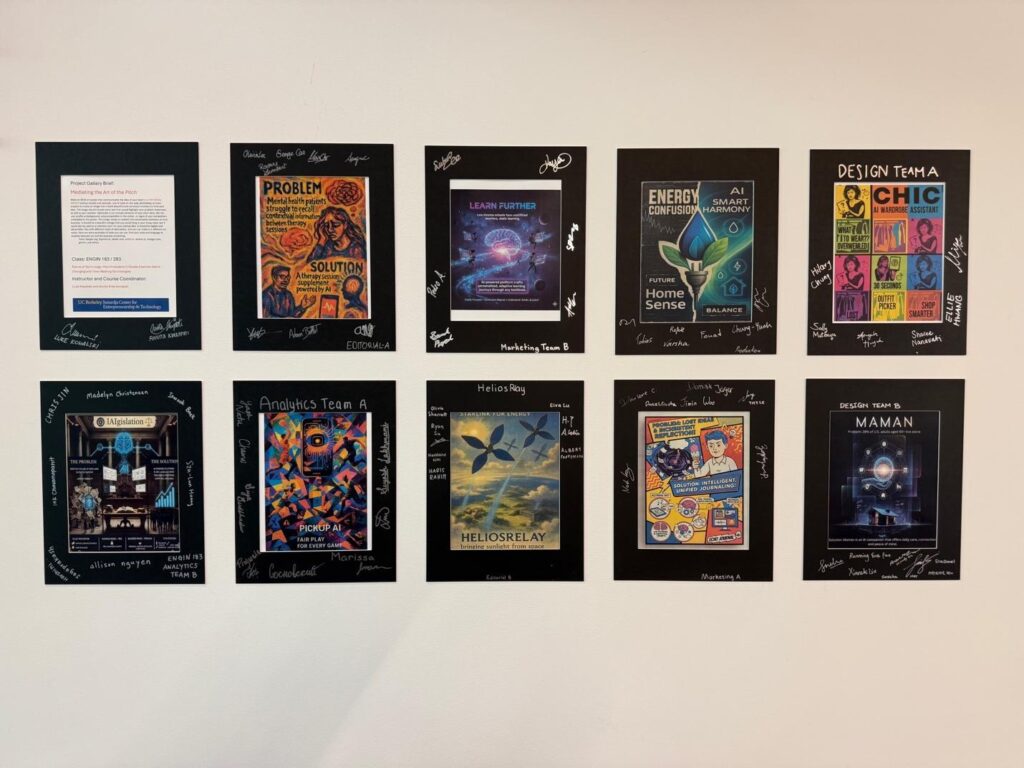
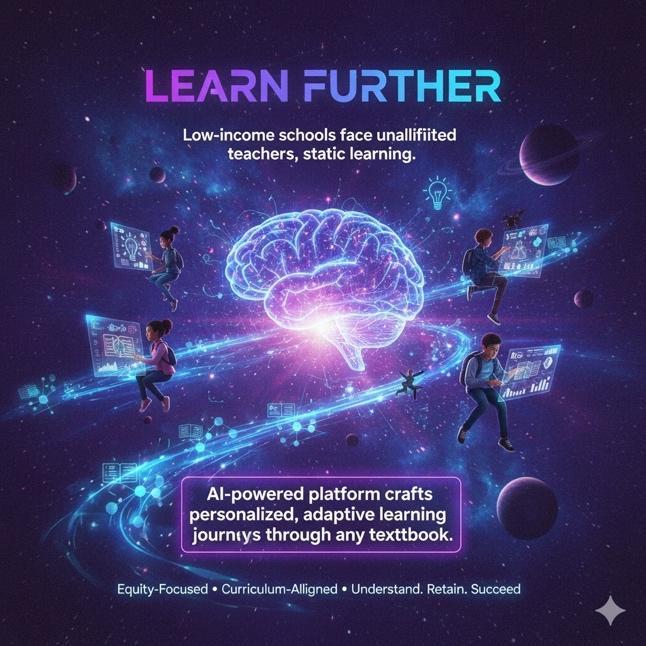
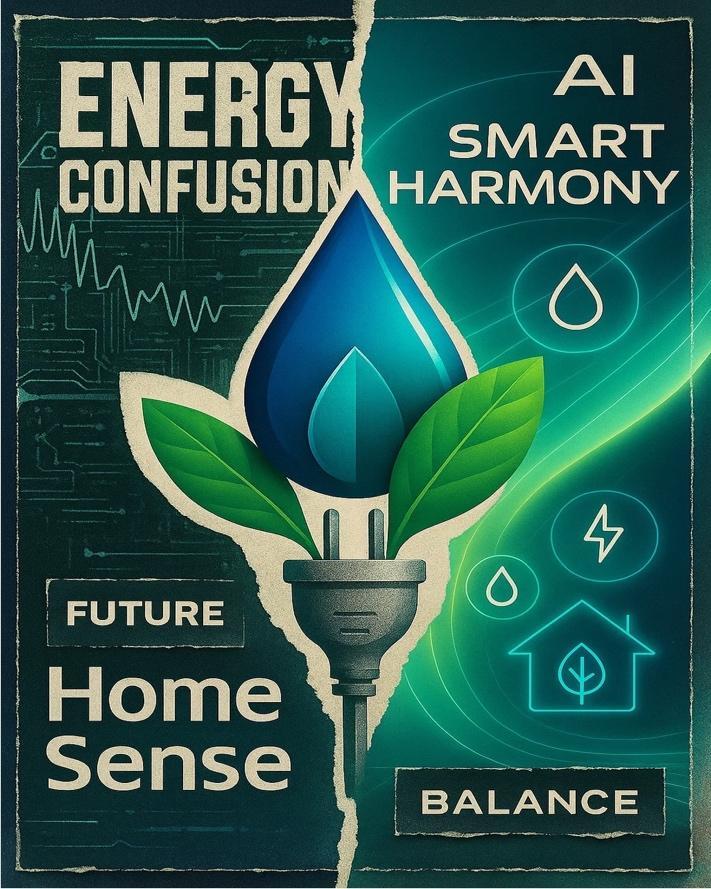
Students were asked to form multidisciplinary teams of 4-7 students and were coached to create pitches for AI and Social Impact startups. Here is the project brief and the gallery:
Mediating the Art of the Pitch:
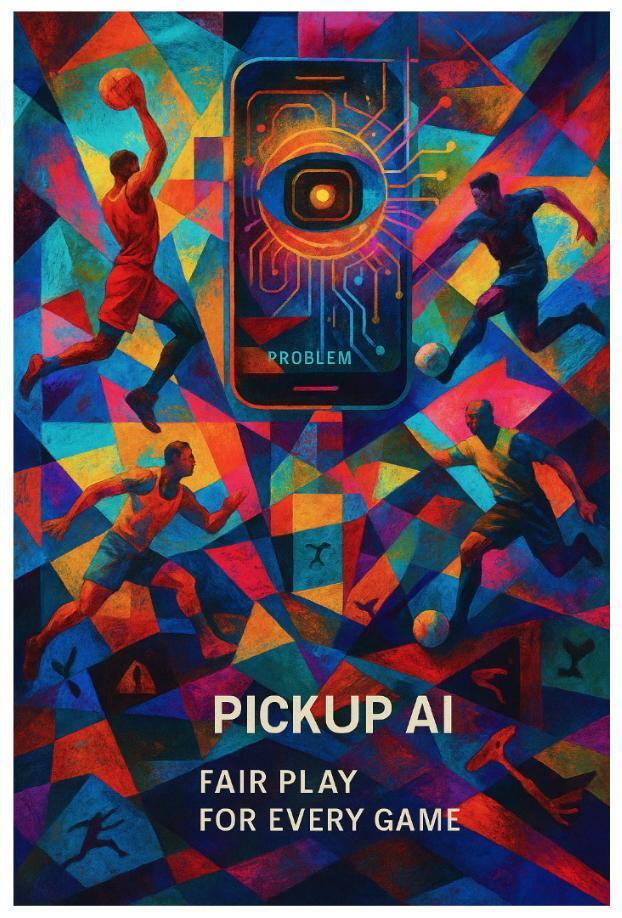
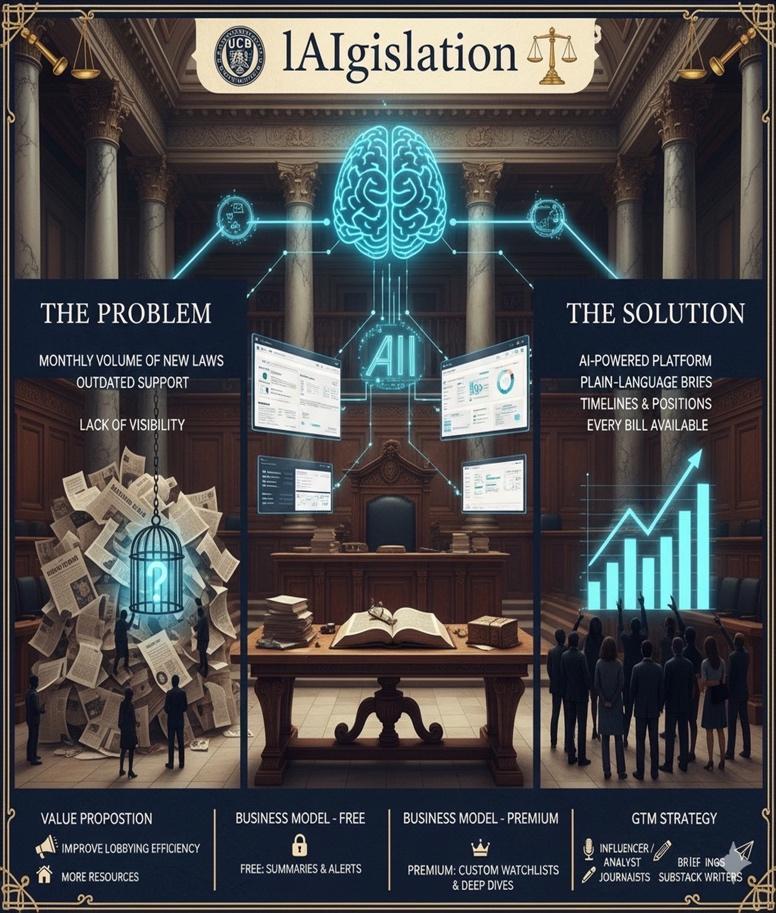
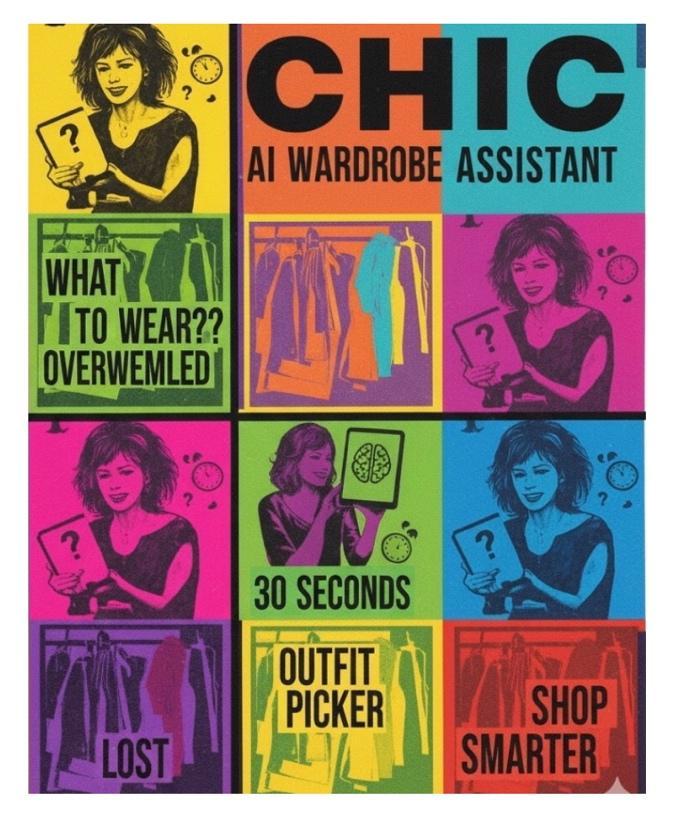
Each team should make an 8X10 art poster (X3 versions) that communicates the idea of your team’s startup visually and textually. Use AI tools on the web, photoshop, or even crayons to create an image that is both beautiful and also convinces investors to fund your idea. The image should include some text that would highlight your problem statement, as well as your solution. Optionally It can include elements of your pitch deck, like the user profile as background, value proposition in the center, or logos of your competitors embedded in the poster. This image needs to mediate the conversation between art and business. It should be a beautiful collage that you could hang in your living room, but it could also be used as an elevator pitch for your startup idea. It should be legible and discernible. Play with different levels of abstraction, and you can make it in different art styles. Submit the best 3 designs from your team by the end of class. The submission should be a high quality 8X10 inch JPG that would be suitable for printing on glossy stock. Here are some examples of tools you can use, and an example prompt and then some styles of posters, from very abstract, to more literal, and almost cartoonish. Find your style and language to mediate between art and the business of pitching. Due by end of class, but resubmissions will also be accepted by end of next day
- Tools, deepAi.org, Openart.ai, davinci.ai, chatgpt, gemini.google.com, app.ltx.studio, any others.
- Prompt Example: Create an 8″ by 10-inch piece of art based on my startup pitch deck that includes a problem statement and a solution. Make it a collage in a cubist style. My startup aims to help professors create a class curriculum based on a public textbook. Make this piece of art communicate the idea of my startup verbally but also include amazing visuals and a collage that appeals to investors in my startup. Include some text in the image that talks about the problem of not having quality curricula, and then the solution involving using AI to generate a class based on a public domain textbook. Include logos of universities and make the problem and solution text legible.
Output of the student work and the Gallery
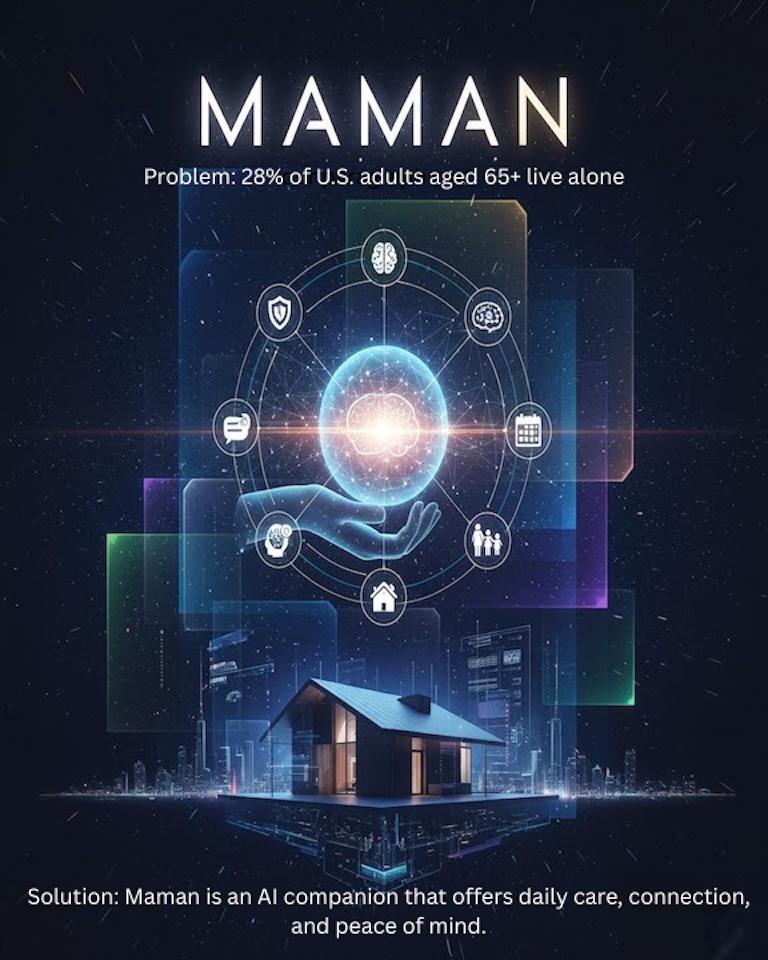
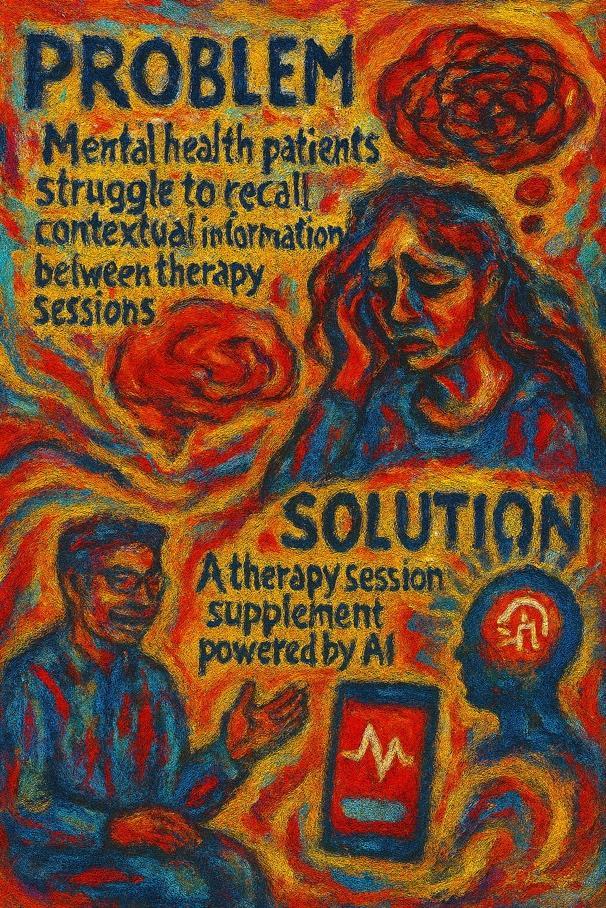
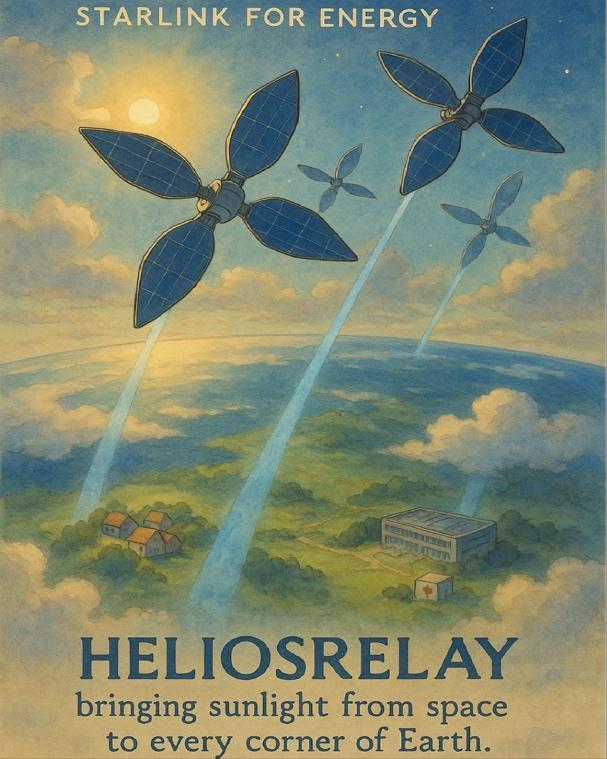
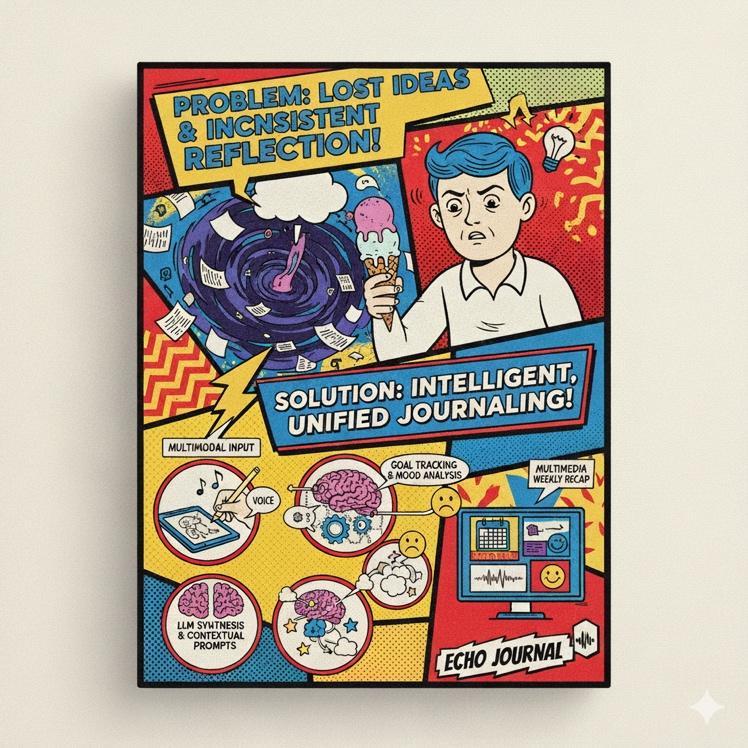
3. The Futurist book:
The best way to describe the book that was created by the teams is to quote the Amazon Kindle Publishing description written by a graduate student in the class, Rafael Sanlis.
———————
This book is a snapshot of what happens when curiosity, technology, and purpose meet inside a classroom at UC Berkeley. Created by the students of the Fall 2025 How to Be a Futurist course at the Sutardja Center for Entrepreneurship & Technology, it captures the mindset of a generation learning to shape the world rather than just inherit it.
The course was built around two innovation frontiers: Artificial Intelligence and Healthcare AI—domains where breakthroughs don’t just change industries; they change lives. Through research-based case studies, each student analyzed emerging ventures pushing these fields forward, using netnographic methods to go beyond headlines and uncover real ecosystems, incentives, and user behavior.
But entrepreneurship is not only analysis—it is human. To understand the lived experience behind innovation, each student also conducted a recorded interview with an entrepreneur, listening to unfiltered stories of risk, resilience, failure, and meaning. These conversations form the emotional backbone of the book, grounding theory in lived reality.
Working in teams, students then developed their own AI-for-social-impact startups.They built Dirty Dozen pitch decks, designed business and revenue models, mapped technology architectures, and projected financials. But they also did something rare in business education: they translated those ideas into visual art. Through a poster collage exercise, they learned that every startup is also a narrative—and that how we feel a solution can be as important as how we explain it.
Comparing consumer AI with healthcare AI throughout the course revealed an essential lesson: technology advances fastest when it helps people understand themselves—their habits, their bodies, their impact, their potential. Whether optimizing home energy use or supporting clinicians with data-driven insight, the future is shaped by tools that empower humans rather than replace them.
This book is more than a compilation of research and projects. It is a record of a group of students learning to observe the world differently—and to imagine new ways to improve it. It is a testament to creativity, rigor, collaboration, and the belief that the future is not something we wait for—it is something we build.
Books from this and past semesters can be purchased on Amazon.
————————————————
Contributors, Authors, and Student Teams creating this book were :
Analytics Team A
• Chenxi Qin
• Marissa Jensen
• Prajwala Maharjan
• Ryugwang Jang
• Siya Buddhadev
• Suyash Lakhmani
• Vladimir Sosnovskii
• Yash Natu
Analytics Team B
• Allison Nguyen
• Chris Jin
• Harshini Jayaprakash
• Ink Chavanapanit
• Inwook Baek
• Madelyn Christensen
• Szu Lun Huang
Design Team A
• Angela Huynh
• Austine Lotanna Iheji
• Ellie Hwang
• Hannah Park
• Hilary Chung
• Mia Wu
• Sally Mutemwa
• Shailee Nanavati
Design Team B
• Ella Donel
• Mandy Liu
• Melanie Wu
• Runming Fan
• Sasicha Thongkhaoaon
• Sneha Menon
• Xianzhi Liu
Editorial Team A
• Adam Bellet
• Arturo Mendoza Gutierrez
• George Cao
• Maximilian Christof
• Olivia Lee
• Roxane Lambert
• Sun-Q Kim
• Yule Kim
Editorial Team B
• Albert Ponferrada Sicart
• Alparslan Cetin
• Elva Lu
• Haris Rahim
• Hongyi Yan
• Madeleine Kim
• Olivia Sharratt
• Ryan Su
Marketing Team A
• Bi-Syuan Pan
• Chuxuan Ma
• Daniel Pasha
• Darlene Chen
• Dominik Jaeger
• Jimin Woo
• Noah Koenig
• Thy Le
Marketing Team B
• Aljawharah Alrasheed
• Ava Yu
• Kaya Roberts
• Pedro do Amaral
• Sameh Phopal
• Spencer Brien
• Subin Lee
Production Team
• Chung-Yueh Wei
• Fouad Sinno
• Kevin Zhou
• Rafael Sanlis
• Rosa Guo
• Sharon Zhao
• Tobias Bangert
• Varsha Chilukuri
And the same class is being offered in the Spring of 2026, so there will be even more books, AI posters, and founder wisdom podcasts!
By Luke Kowalski, December / January 2026
The post SCET Students deploy new AI tools, leave the dorm room to interviewentrepreneurs, and also write a book about startup success factors, all in thecourse of one semester! appeared first on UC Berkeley Sutardja Center.
[ad_2]
Source link
