[ad_1]

“Where are you from?”
If you ask a Berkeley student, half the time, the response will most likely be “Norcal.” or “Socal.” A nearby suburb. A freeway exit you pass by all the time.
But then there are people whose response to that question might be Prague, Bangkok, Mohali, Riyadh, Otaniemi, Accra, Berlin, or Madrid.
Turns out the world isn’t that small. The person sitting next to you didn’t just take a different bus to get here; they actually flew over a few oceans.
It’s pretty cool to be sitting in class, and the person next to you has come from a part of the world that you’ve only seen on a map. What does their life look like back home? Why are you both interested in the topics of this class? Do they like gelato as much as you do?
Well, if you’re interested in meeting more people with cool last names, you’re in luck. SCET courses offer Cal students a unique opportunity to work alongside students from around the globe. There are exchange students scaling ventures, studying a Master’s in astrophysics, or eating ruisleipä for breakfast. Different education, different cultures, and different perspectives. Yet just like you, they’re sitting in this class taking notes.
Read on to hear about the international entrepreneurship experience, the different nuances of rule-following and rule-breaking, discovering entrepreneurship as a compelling career path, strengthening resilience and risk-taking, and finding family among fellow movers and innovators.
Diana DeMartini

Diana first came across SCET while searching for classes outside her traditional business curriculum.
“I wanted to find something business related that wasn’t a Haas or UGBA class, and I found entrepreneurship. I never really thought I wanted to explore that because it was too much creativity. But it kind of sounded fun. I signed up, and I really didn’t know what to expect.”
While the first two weeks were an adjustment period of learning different startup terms, Diana says she soon “got in the groove.”
Although both are rooted in business, Diana explains there is a difference.
“SCET classes are way more project based. We did not have a textbook, and we’re not reading textbooks or have written homework assignments or quizzes. It’s really hands-on with projects and people.”
“Understanding that everyone can be an entrepreneur started here with the SCET class.”
What made the experience transformative was not only the class format, but the people. She describes how her class included students from France, Spain, Germany, Nigeria, and Uganda. These students were in SCET classes as part of SCET’s Startup Semester Program for visiting students.
“It was really interesting. Having different voices and different opinions will ultimately make a product better, and it was interesting to experience it. It’s not only because everyone says diversity is important, I actually experienced how it shapes products so much better.”
Moreover, she began noticing how deeply culture influences thinking.
“There were different personalities. Some followed the rules and stuck to how they did things in the past, whereas I noticed the Ghana exchange students were way more open-minded and didn’t even think about the rules. It was really interesting to see the dynamic of free thinkers versus a little bit more following the rules kind of thinking.”
The contrast pushed Diana to reflect on herself.
“At the beginning of the semester, I was thinking more inside the box. But towards the end, and also after the Bootcamp, both classes really pushed me to understand that rules are actually there to be broken. So right now, I see myself more in the other spectrum.”

Diana attributes that shift to the class activities and competitions, where she learned of the different approaches to solving challenges.
“It was always the ones who did not follow the rules that won. The more that happened, I was like, ‘Wait a minute, I should be doing that too.’”
For example, during the Bootcamp, students were presented with pasta, tape, and a paper bag. The goal: build the tallest structure.
She explains how the slideshow only showed the items inside the bag, so her team assumed they couldn’t use the bag itself. However, this statement was never made.
“At the end, all the groups that used the paper bag itself won. Since we followed the rule, or what we thought was a rule, we didn’t win.”
“It made me think about pushing boundaries. The saying is kind of different. ‘Rather safe than sorry.’ But in entrepreneurship, it’s better to be sorry than be safe.”
Some of the exchange students modeled that mindset.

Diana enthusiastically points out, “The girls from Ghana were very bold, but in a good way. They’re not scared. They were always positive. They don’t take life too seriously, and I really like that about them. They seem so positive and they just take away my fear. I’m like a very anxiety driven person, and I overthink everything. Whereas when I talk to them, it’s always a smile, happy, and positive. What I took from them is to take life not too seriously and life is a beautiful thing.”
On the other hand, she remembers a conversation with an exchange student friend in her team who was hesitant about cold emailing. In one of their projects, he was focused on a narrower target audience, while Diana thought their product was capable of serving a wider audience.
“He said, ‘It’s just impossible.’ And I’m like, ‘But it’s not.’”
The exchange made her pause and reflect on how limiting your vision can shape what you think is possible. “If you’re close-minded, then are you able to achieve the biggest thing?” She explains, “Even if you reach high and you reach another point that’s not as high, it’ll still be higher than what you initially thought.”
Rather than dismissing him, it pushed her to reflect on her own thinking. “In that particular moment, it made me more open-minded because I was surprised. I wanted to have a conversation to understand it, and try to help him to be more open-minded.”
It also made her think about being “more adaptable and flexible in changing your idea or way of thinking.”
…
“It’s very interesting to see how everyone is different because of their different backgrounds. Their ideas and opinions and point of views can influence a product. The more opinions and the more diverse opinions you have, the more things you can choose and pick from, which makes a product or a project better.”
The habit of actively seeking out perspectives has stayed with her.

“Now, when I’m trying to build something, or for classes, it’s definitely super important to me that when you’re in a group of five, that you have five opinions. I will go and ask, ‘What is your opinion? What do you think?’ Because that could be the groundbreaking idea or opinion that shapes it.’”
“I knew from theories that diverse opinions are important, so really seeing it in action through the SCET class has reinforced that this is a core value of mine now.”
“In Haas classes, I feel like everyone is set in stone. It’s hard for people to blend. I feel like you stick with your finance people, or with the consulting people. Whereas with the startup culture, we need someone who’s good at finance, someone who’s good at marketing, someone who’s good at strategy. Putting these different perspectives together was the biggest difference. Being exposed to engineering, data science, MET majors.”
“I am a finance girl. My friends are people who like finance as well. That’s why I really enjoy SCET, because I have those different people around me. That’s why I did the Bootcamp, and why I am the course coordinator for sports tech now. I really love it. It’s different.”
It has also impacted the classes Diana chooses to take.
“There’s this business bubble up here in Haas. That’s why I’m so excited about the classes outside of Haas to talk to other majors and hopefully build professional relationships. Since we’re going to be the future leaders, it’s very valuable to network with people outside of the traditional business bubble and because that will make us better leaders.”
…
Looking back, Diana is happy she was able to take courses outside of her traditional classes.

“I think it has really shaped me as a person. I mean, it’s kind of crazy. I’m way more open minded now. I look at assignments differently as well.”
Diana intends to go into finance or banking. But now she’s opened up her career path to include startups.
“It’s just so much fun to work with startups. I would consider maybe doing two positions at the same time, like being a CFO for two startups because you have so much more influence in what’s happening in the company. That would be super cool.”
“Postgrad, if I have the opportunity to work for a startup, I would take it. Whereas before that, it would have scared me away a lot. I was like, ‘Oh my god, there’s nothing I could do with a startup.’ But really understanding the startup culture through SCET made me like way more open-minded to any size of company.”
“The classes really push us to train that muscle of thinking outside of the box. SCET has trained my brain. It has completely changed me. It’s crazy.”
Jai Bhatia
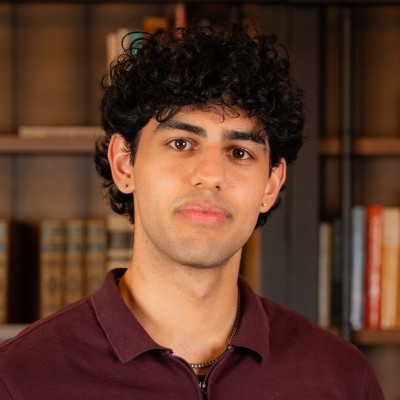
“Building stuff for the class led me to dropping other classes and going full in on building the startup that I’m building now. I got a lot of clarity from just taking the class and being in that environment.”
Entrepreneurship has always been the plan. “I wanted to make my own startup. That’s the reason why I chose Berkeley in the first place.”
Yet before the AI-Powered Startups class, he was on a different path. Jai was fully prepared to take a full-time software engineer job after graduation.
Working with other entrepreneurial minded exchange students made him rethink his startup journey. “We would brainstorm together and they convinced me to be serious about the startup stuff.”
“I was like, ‘Okay, maybe I can make some money on the side.’ But they were like, ‘No, you got potential and we can do something together.’ They were just super excited and energetic. They had a lot of gratitude for being in the Bay that I took for granted.”
“They were like ‘Look, we’re in the best place in the world. We’re in Berkeley. We can do whatever we want.’ And I was like, ‘Okay, maybe.’ But they really had all that conviction because they worked to get here. It was a different perspective.”
“Being a part of the class definitely catalyzed me to meet a lot of people and eventually find my co-founder who I’m now in YC with. It’s sort of a byproduct of putting myself in the right rooms. The class helped me meet other people who are like-minded and fully in entrepreneurship. That changed my mindset. I think if I didn’t take the class, and I didn’t meet Khalil and he didn’t connect me to all these people, and I didn’t meet Jayce [Jai’s teammate, an exchange student from Singapore], I wouldn’t have ever gotten serious about going all in on this, rejecting my job offers, and pursuing this full time. Even applying to YC wasn’t in my mind.”
Now that he is back on the entrepreneurship track, working with students outside of Berkeley has also helped him as an entrepreneur. “There are a lot of people that I wouldn’t have met otherwise, especially Jayce. He gave me a lot of insight on what it’s like in Singapore, what the companies and culture are like, which helped me refine my product.”
As Jai builds his company Crow, he’s receiving a lot of outreach from people in Singapore and India who are interested in joining his team. In these talent hiring decisions, Jai pulls on conversations he’s had throughout the course, which helped expose him to the different mindsets, cultures, and travel logistics of individuals living internationally.
“I just expanded my mind to a lot of those things. If I didn’t talk to them, I totally would have been unaware of the hiring processes and how companies work there. It’s ultimately proving to be useful to me now when I’m running my own company.”
Conversations with classmates have also reshaped how Jai thinks about markets. “They bring perspective to different markets,” Jai remarks. “I never would have thought of going to France and connecting with them. Getting that perspective of “The market is really big, and there are drastic differences between America, Latin America, Singapore, and China. It really helped me extend my mind.”
“And now that we’re working with an Indian company, I totally get it. I grew up here, but America isn’t the only thing.”
Working with Pilar, an exchange student that previously worked at a YC company named Happy Robot, helped Jai rethink market sizing and strategy. “We were thinking through a lot of ideas and she had a lot of connections and experience. She was able to tell me ‘Hey, the market’s too small’ or ‘Hey, maybe we can look at the European market.’”
“I think I got out a lot from the class personally because it put me down the right path to get into YC, which basically changed my whole life trajectory. It helped me get into the right rooms with the right people.”
“The rooms you choose to put yourself in dictates if you’re going to be in the startup bubble.”
Prisha Singh

“My CS classes have a very particular demographic. Going to classes outside of my major was something I looked forward to, and meeting people that I probably wouldn’t have otherwise.”
In her Applied Resilience course, students formed teams and engaged in various projects. On her team were two exchange students visiting for the semester. “We actually really got to know each other. It was a really great time, and a really good opportunity to learn from people.”
One teammate was a Master’s student who had spent time in industry and returned to school. “It was really cool to learn from someone like that, especially because she was from Norway and did her undergraduate degree in the UK. She had a lot of different perspectives to share.”
Prisha’s other teammate, Enzo, was from Brazil. “I had a lot of questions for him because he was also a computer science major, and so we talked a lot about how the degrees were similar and different in different countries.”
Prisha explains how the focus of the Berkeley EECS department is primarily research focused. “Whereas when I was talking to Enzo, even though he was studying computer science, he had a really broad focus. He helped a lot with the business component of our project, and he really understood a lot more about business fundamentals. I think that’s because his degree was a little bit more general than ours is. He wasn’t just focused on taking AI classes like we do. His focus is primarily getting a broad understanding of how computer science plays a factor in the real world. It was a really cool situation to be in. I realized that every school has its own culture for every single degree program, and how different computer science degrees are across the world.”
“I think it definitely opened up my eyes to a lot more possibilities.”
Prisha has long been curious about product development rather than purely software development, which would require more business acumen.
“I never really knew how to go about doing that. I realized that all I’ve been doing up to this point was taking computer science classes, but that’s just software fundamentals. It wasn’t really telling me applicable skills to potentially step into a different role of actually architecting an entire solution. So after hearing from Enzo, and seeing his background and how that helped him in our team project, it pushed me to take classes this semester that could potentially support that idea of a different career move at some point.”
This semester, Prisha is enrolled in Product Management and Amazoogle (a course about data-driven business models).
“A big part of why I decided to take these classes this semester is because I had such a good time in Applied Resilience last semester.”
Beyond academics, the class also exposed her to a different mindset around career timing and pressure. Berkeley is known for its hard-working culture, which often results in job offers and allows students to move forward in their careers and lives. However, Prisha explains that a lot of her exchange classmates were coming back to school to pivot. “It’s almost like a pivot backwards, but it’s like taking a step back to move two steps forward.”
“Moreover, I think the inherent grind culture wasn’t really there for them.” While she was taking Applied Resilience, Prisha was applying to full-time jobs. “It honestly stressed me out a whole bunch, but I could tell that for my teammates, that wasn’t necessarily something people were worried about. I was super stressed, but I could tell that I was one of few people in this group, which was a really interesting environment to be in.”
“Honestly, it made me enjoy working with them a lot more. I really enjoyed working on our group project that semester, because it allowed me to be a lot more present with the project and my team.”
Their collaboration was well received, and their project was selected to present at Collider Cup Large Bid, and the SCET Expo.
Dominik Jaeger
Bonus: Let’s flip the script. How did the exchange students feel about Berkeley students?
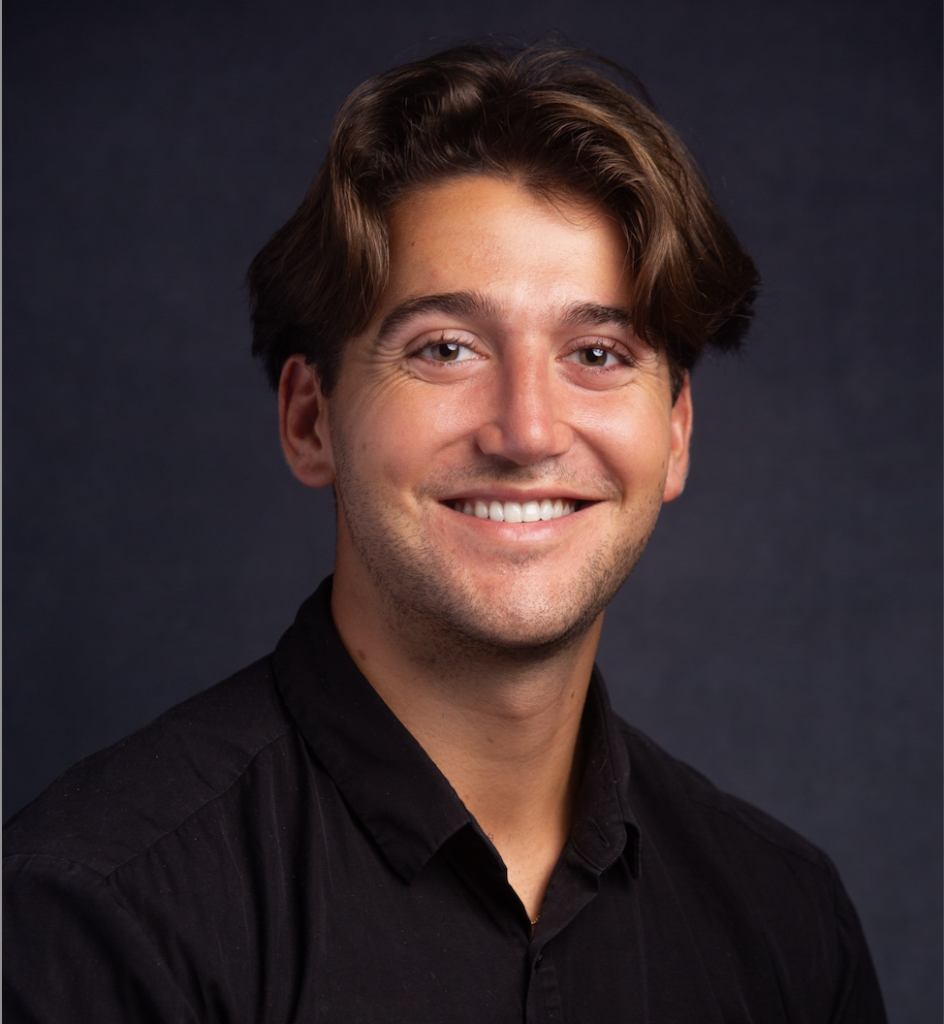
Meet Dominik, an exchange student from Germany, who enrolled in the Bio-inspired Innovation Challenge Lab during his time at Berkeley.
Despite coming from abroad, Dominik shares the same views as his Berkeley peers when it comes to the SCET classroom environment. “It was quite diverse. It was really cool to work together with multiple different people.”
“Before I came to Berkeley, I already knew that I wanted to become an entrepreneur. That’s actually also one of the reasons why I chose Berkeley. I think it’s really important to combine the technical fields with the business entrepreneur fields.”
Collaborating with his classmates made him more invested in entrepreneurship. “I realized I’m really passionate about following my own goals, but also having lots of freedom and working on intense challenges.”
“I noticed that people in the US can really present well, especially selling and communicating. That’s a big skill of American people. It was a great lesson for me. I really improved multiple social skills throughout my Berkeley experience.”
Dominik also appreciates the speed of the diverse teams. “The students in Berkeley were really fast. They’re really efficient.”
While Dominik has taken entrepreneurship classes in Germany, he notes the difference in the environment. “In Germany, it’s more independent. In Berkeley, the teachers are closer to you and they help you a little more.”
“The social experience is also massively different. In Germany, you kind of just go to school and do your stuff. In Berkeley, it’s much more of a social experience, where you are friends and fellow students at the same time.”
A highlight of the course was the last week where the class shared their final presentations on everything they worked on during the semester. “It was just really cool to see the progress in the end. It was really intense, but at the same time it was so fulfilling and satisfying to finish the class and celebrate. All the teams we competed with in class, we’re friends now. It was a really great vibe.”
When Dominik first arrived at Berkeley, he knew he wanted to make the most of his time. “I wanted to learn about the Berkeley startup mindset, the people, Silicon Valley, and energy.”
That goal was achieved. “I got cool insights. I have a network now in Berkeley and Silicon Valley. I met really smart people all around the world.”

In terms of the Bio-Inspired Challenge Lab, Dominik describes, “The class helped me understand how to come up with solutions out of multiple problems, even from looking out of the window. It was a really interesting way of thinking.”
By the end of the semester, Dominik left with great memories, learnings, and relationships. “I really had a family when I left. Not only fellow students, but really close friends, and even professors. I feel like there’s always people I can reach out to.”
“From the first day on, I felt really comfortable. I really felt at home and that’s how I left. So this semester was a really cool chapter for me.”
UC Berkeley SCET offers visiting students from around the world the opportunity to join Startup Semester either in the fall or the spring semester. Startup Semester is designed for aspiring tech entrepreneurs, future tech innovators and those interested in learning more about how mature startup ecosystems function. At SCET, the Innovation Collider model is a key pillar supporting our mission of empowering innovators to positively change the world. The Innovation Collider concept is simple: Teams with diverse perspectives, experiences and talents will design better solutions for customers. Startup Semester supercharges the Collider model by bringing entrepreneurial talent from around the world to work alongside Cal students on some of society’s most pressing problems.
The post How to get the benefits of traveling while staying on campus appeared first on UC Berkeley Sutardja Center.
[ad_2]
Source link
